Can AI Actually Improve Your Resume? What It Can and Can't Fix
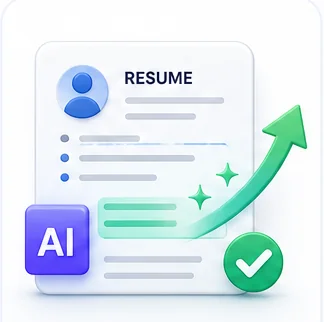
A resume has one job: convince a stranger, in about six seconds of scanning, that you're worth a closer look. Most resumes fail that test not because the person lacks relevant experience, but because the experience is described weakly — vague responsibilities instead of concrete results, generic phrasing instead of language that matches what the role actually asks for. This is exactly the kind of problem AI is genuinely good at fixing.
What AI is genuinely good at improving
- Turning vague duties into concrete achievements — rewording "responsible for managing a team" toward something more specific and results-oriented like "led a team of 6, cutting project turnaround time by 20%," when you actually have the underlying facts to support it.
- Matching your resume's language to a specific job description — many companies use automated systems to screen resumes for relevant keywords before a human ever sees them, and AI is well suited to spotting where your existing wording doesn't match the terminology the role actually uses.
- Tightening writing that's technically accurate but bloated — cutting filler words and passive phrasing so each bullet point reads as a clear, punchy statement instead of a run-on sentence.
- Catching inconsistent formatting, tense, and structure across sections that are easy to miss when you've been staring at your own resume for hours.
What AI cannot — and should not — do
This is the part worth being genuinely careful about. AI can rewrite and reframe what you tell it, but it has no way to independently verify that a claim is true, and it has no access to experience you never mention. Any AI resume tool that invents responsibilities, skills, or achievements you didn't actually have is doing you a disservice — not a favor — because that gap surfaces immediately in an interview when someone asks a follow-up question you can't answer honestly.
A genuinely useful AI resume tool works from what you actually did and makes it read as strongly and clearly as possible — it should never manufacture numbers, job titles, or skills you didn't have. If a tool produces claims you don't recognize as your own experience, that's a sign to push back and correct it, not accept it because it "sounds impressive."
How to use AI resume help well
- Start by giving it the real, complete picture — your actual responsibilities, real numbers where you have them, and honest context — rather than a thin starting draft. The output can only be as good and as truthful as the input.
- If you're applying to a specific role, provide the job description alongside your resume so the tool can tailor language and priority to that role specifically, rather than producing a generic improvement.
- Review every rewritten bullet point against your actual memory of the work. If something reads slightly stronger than what actually happened, dial it back to something you could confidently explain and defend in an interview.
- Use it iteratively — ask for a second pass on any section that still feels weak, rather than assuming the first draft is final.
Building a resume from scratch vs. improving an existing one
If you already have a resume, an improvement-focused tool that takes your existing document and strengthens the language and structure is usually the faster, more natural starting point. If you're starting completely from scratch — no existing resume, unsure how to even structure it — a guided, question-based builder that walks you through what to include section by section can be genuinely less intimidating than staring at a blank page.
Common Mistakes
Letting AI add achievements or numbers you cannot actually back up
Anything that surfaces as a false claim in an interview damages trust immediately and irreversibly. Only keep AI-suggested phrasing you can honestly stand behind and explain in detail if asked.
Using one generic resume for every application
Tailoring your resume's language to each specific job description meaningfully improves how well it matches what an employer (and any automated screening) is actually looking for — a five-minute tailoring pass per application is worth the effort.
Giving AI too little context to work with
A thin, vague starting draft produces a thin, vague result no matter how good the tool is. The more real detail and honest context you provide, the stronger and more specific the improved version can be.
Improve Your Resume Now
Paste or upload your CV and tell us the role you want — AI tailors it into a stronger, ATS-friendly, completely truthful CV.
Frequently Asked Questions
Related Articles
AI Guides
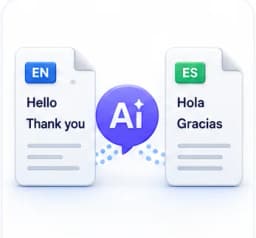
How AI Document Translation Works (and Where It Still Struggles)
AI translation has gotten remarkably good at meaning, tone and even preserving layout — but it still has real limits. Here is how it actually works and where to double-check its output.
AI Guides
What Is OCR and When Do You Actually Need It
OCR turns a picture of text into real, searchable, copyable text. Here is what it actually does, how accurate modern AI-powered OCR really is, and the situations where you genuinely need it.
Productivity Guides
How to Build a Strong Password You'll Actually Remember
Complexity rules like one-capital-one-number-one-symbol are outdated advice. Here is what actually makes a password hard to crack, and how to make it memorable too.