
Building a Repeatable Invoice-to-Payment Workflow
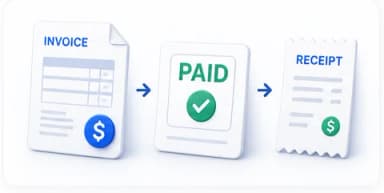
Getting paid on time is rarely just about how good your product or service was — it's often about how much friction sits between finishing the work and the customer being able to pay you without any confusion or delay. A repeatable workflow, done the same way every time, removes almost all of that self-inflicted friction.
The full workflow, start to finish
A consistent, repeatable sequence — the same steps every time reduce both your effort and the chance of a mistake slipping through.
Send to the client
One clear, complete package — nothing the client needs to ask you for separately.
Track and follow up
A consistent follow-up cadence on the due date, not an awkward one-off chase later.
Why bundling supporting documents into one file matters more than it seems
Sending an invoice as one attachment and a signed contract as a separate email from three weeks earlier means the person actually approving payment — often not the person you've been emailing directly — has to go hunting for context across multiple messages. Combining the invoice with its relevant supporting documents (the signed agreement, a delivery confirmation) into one file removes that friction entirely: everything needed to approve the payment is in the one document that lands in front of the approver.
Making the workflow genuinely repeatable, not a one-off effort
- Use a consistent invoice template every time, so line-item structure and required fields never vary between customers or projects.
- Standardize which supporting documents get bundled for which type of engagement — a project-based client might always need a signed scope-of-work attached; a recurring retainer client might not.
- Set a fixed follow-up schedule (a reminder a few days before the due date, a follow-up a few days after if unpaid) so chasing payment becomes routine, not an uncomfortable improvisation each time.
- Keep a simple record of invoice status (sent, paid, overdue) so nothing quietly falls through the cracks, especially once you're managing more than a handful of active invoices at once.
Handling the inevitable exceptions without breaking the workflow
Some invoices will need a correction, a partial payment plan, or a dispute resolved before payment happens — that's normal, not a workflow failure. What a good repeatable process actually buys you is that the routine 80% of invoices move through with zero manual thought, freeing up your attention for the genuine exceptions that actually need it, instead of every single invoice requiring the same amount of ad-hoc effort regardless of whether anything unusual is actually happening.
Common Mistakes
Sending an invoice as a standalone document with no supporting context
If the approver needs to hunt down a previously-sent contract or quotation separately, that's real friction that delays payment. Bundling relevant supporting documents into one package removes that step.
Having no consistent follow-up schedule for unpaid invoices
Ad-hoc, awkward one-off follow-ups are both less effective and more uncomfortable than a routine, expected reminder cadence built into your standard process.
Changing your invoice format or process for every client
Inconsistency makes the whole process harder to manage at scale and increases the chance of forgetting a required field or step. A single, repeatable template applied consistently reduces both effort and error.
Start This Workflow — Create an Invoice
Create invoices, quotations, delivery notes and waybills from one professional workspace.
Frequently Asked Questions
Related Articles
Business Documents
How to Create a Professional Invoice That Gets You Paid Faster
Late payments are often a paperwork problem, not a customer problem. Here is exactly what a clear, professional invoice needs to reduce delays and disputes.
Business Documents
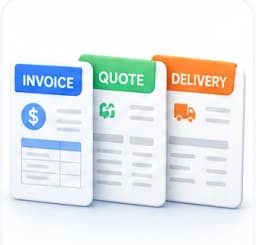
Invoice vs Quotation vs Delivery Note: What's Actually the Difference
Three documents that get confused constantly, each with a completely different legal and practical purpose. Here is exactly when to use which one.
Business Documents
Are Digital Signatures Legally Binding? A Practical Guide
In most parts of the world, yes — with real conditions attached. Here is what actually makes a digital signature enforceable, and where paper still wins.